When clients approach us for 3D printing services, one of the most common questions is: "Should we use FDM or Resin?" Both technologies are incredible, but they serve entirely different engineering purposes. Choosing the wrong one can lead to parts that snap under pressure or lack the required detail.
Here is our professional guide to making the right choice for your next project.
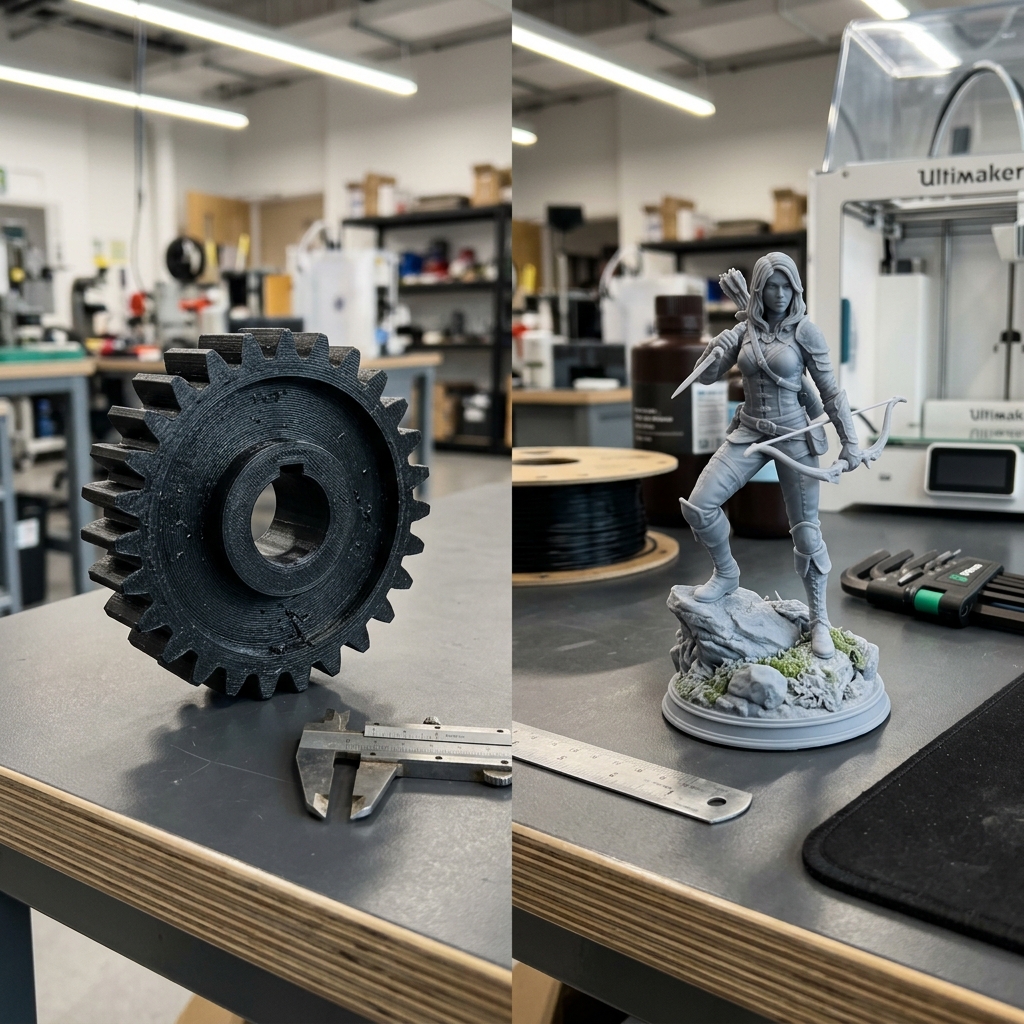
FDM (Fused Deposition Modeling)
FDM 3D printing works by melting thermoplastic filament (like PLA, ABS, or Carbon-Fiber Nylon) and extruding it layer by layer through a heated nozzle.
When to use FDM:
- Functional Prototypes: If your part needs to withstand mechanical stress, heat, or chemicals, FDM is the king. Materials like ABS or PC (Polycarbonate) are incredibly tough.
- Large Parts: FDM printers generally have much larger build volumes, making them ideal for bulky enclosures or automotive brackets.
- Cost-Effective Iterations: Because filament is relatively cheap, FDM is perfect for printing 5 different versions of a prototype to test fitment before final production.
Limitations of FDM:
The downside is surface finish. Because it extrudes thick layers, you will often see visible "layer lines." While we can sand and post-process these, FDM is not meant for highly intricate jewelry or miniatures.
SLA/DLP (Resin Printing)
Resin printing works by using a laser or an LCD screen to cure liquid photopolymer resin into solid plastic.
When to use Resin:
- Extreme Detail: Resin printers can achieve layer heights of 0.01mm. This means they produce parts that look injection-molded straight out of the machine.
- Jewelry and Dental Casting: Special castable resins allow for perfectly smooth patterns that burn out cleanly.
- Complex Geometries: Resin is fantastic for intricate lattices or tiny microfluidic channels that would clog an FDM nozzle.
Limitations of Resin:
Standard resins are brittle. If you drop a resin part on a concrete floor, it will likely shatter. While "Tough" or "Engineering" resins exist, they still generally cannot match the long-term impact resistance and UV stability of industrial FDM materials like ASA or Nylon.
Conclusion
At Replix3D, we carefully evaluate every CAD file submitted to us. If you need a strong bracket for a car engine, we will route you to our industrial FDM machines. If you need a highly detailed master mold, we will suggest Resin.
Not sure which one you need? Upload your file today and our engineers will provide a free DFM (Design for Manufacturing) review!