Classic car restoration frequently faces the hurdle of obsolete, discontinued parts. When a critical mounting bracket or housing is broken, replacements simply do not exist. That is where professional Scan-to-CAD reverse engineering becomes essential.
In this case study, we walk through how our California lab restored an original mechanical bracket using our advanced digital reconstruction pipeline.
The Challenge
The client brought us a worn, cracked cast steel bracket from a vintage transmission housing. Due to age, rust, and material fatigue, key alignment faces were distorted, and one of the mounting flanges had snapped off entirely.
Step 1: Laser Reality Capture
We began by securing the part and capturing its exact geometry using our high-precision 3D scanning services. This allowed us to map every crack, contour, and dimensional attribute of the surviving piece to within 0.001 inches without causing further damage.
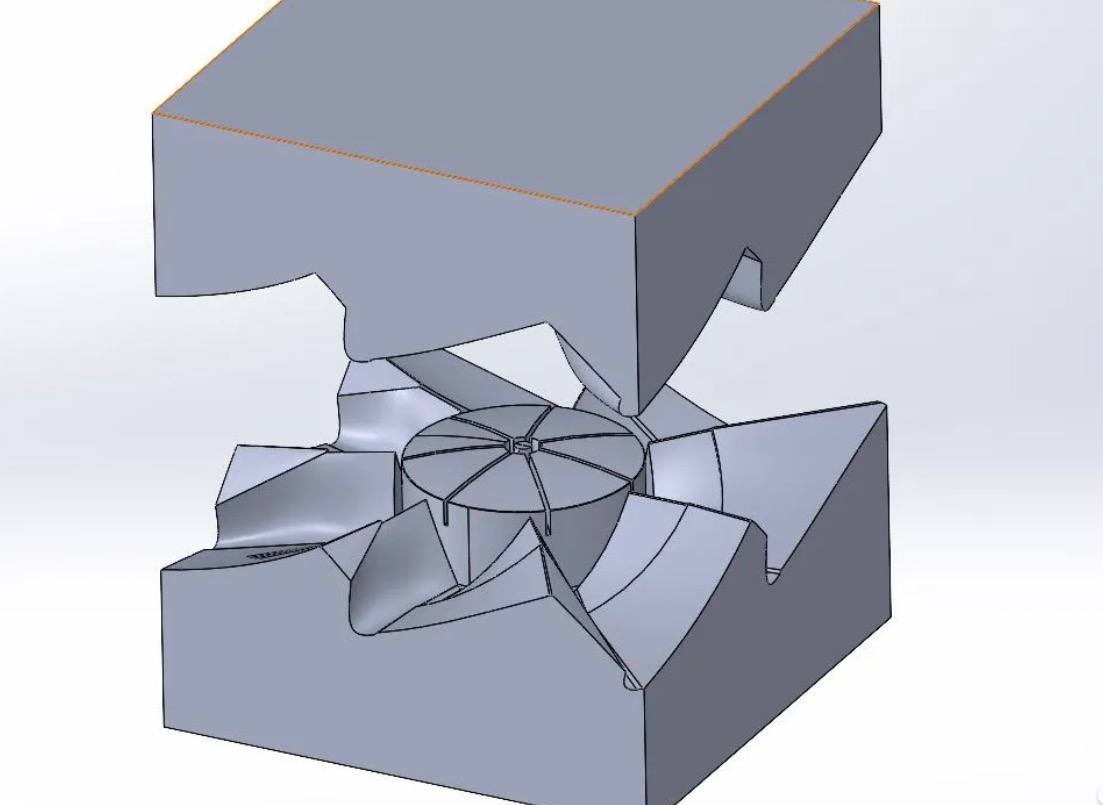
Figure 1: Reconstructed parametric CAD model (view more in our project portfolio) generated from raw 3D scan reference data.
Step 2: Parametric Reconstruction & Design Intent
A raw scan (often called a "dead mesh" or STL) is useless for traditional machining or stress analysis. Instead of just wrapping the scan, our engineers used it as a dimensional template inside SolidWorks.
We applied Design Intent modeling to:
- Establish true flat planes, concentric circles, and correct bore axes.
- Repair the broken flange by copying the symmetry of the matching side.
- Clean up dimensional errors accumulated over decades of mechanical wear.
The result is a clean, fully editable STEP/IGES model.
Step 3: Prototyping and Production
Before committing to metal machining, we printed a 1:1 fitment prototype using our FDM 3D printing services to test the tolerances on the actual engine housing. Once fitment was verified, the model was processed for CNC routing and milling from aerospace-grade 6061-T6 aluminum.
If you have obsolete or damaged parts that need to be digitized and recreated, contact our engineering team today for a confidential evaluation!